Choosing the right infusion pump can play an important role in delivering medication safely and effectively. Depending on the medication, prescribed flow rate, treatment duration, care setting, and patient needs, healthcare providers may consider either an elastomeric infusion pump or an electronic infusion pump.
While both pump types are designed to deliver medication at controlled flow rates, they use different mechanisms and offer different features. Understanding these differences can help healthcare providers determine which infusion solution best aligns with a patient’s therapy, care environment, and lifestyle.
What Is an Elastomeric Infusion Pump?

An elastomeric infusion pump is a disposable, lightweight portable device that uses a stretched silicone membrane to create pressure and deliver medication at a predetermined flow rate. As the membrane returns to its original shape, it pushes medication through the flow restrictor and tubing.
Unlike electronic pumps, elastomeric pumps generally operate without batteries, electronic programming, or electronic alarm systems. This design can provide patients with a simple, portable option for receiving continuous infusion therapy in both outpatient and home infusion settings.
Elastomeric pumps may be used for a variety of therapies, including certain antibiotic infusions, chemotherapy regimens, pain management, and other continuous infusion applications, depending on the specific device and medication.
Comparing Elastomeric and Electronic Infusion Pumps
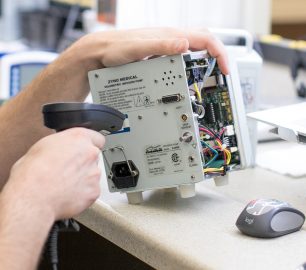
While elastomeric pumps prioritize simplicity and portability, electronic pumps offer greater control and programming flexibility. Electronic pumps typically use electronic components to regulate flow and may provide features such as adjustable flow rates, alarms, and infusion history. For therapies that require frequent rate adjustments, detailed monitoring, or more complex programming, an electronic pump may be more appropriate. For certain continuous, fixed-rate therapies where portability and simplicity are priorities, an elastomeric pump may be a better fit.
- Practical Benefits of Elastomeric Pumps
- Ease of use with minimal programming
- Single-use design
- Minimal training requirements
- Portable and lightweight
- No batteries or recharging required
- Simple operation with reduced need for on-call support
- Considerations of Elastomeric Pumps
- Flow rate may vary depending on factors such as temperature, medication viscosity, and fill volume
- No pump history log to document infusion
- No electronic alarms to alert users to potential delivery interruptions
- Fixed reservoir volume
- Less programming flexibility compared with electronic pumps
These features can make elastomeric pumps particularly useful when simplicity, portability, and continuous fixed-rate infusion are priorities.
While elastomeric pumps offer several advantages, they are not designed for every infusion therapy. Healthcare providers should consider the specific requirements of the medication and treatment plan when selecting an infusion device.
InfuLife Elastomeric Infusion Pumps
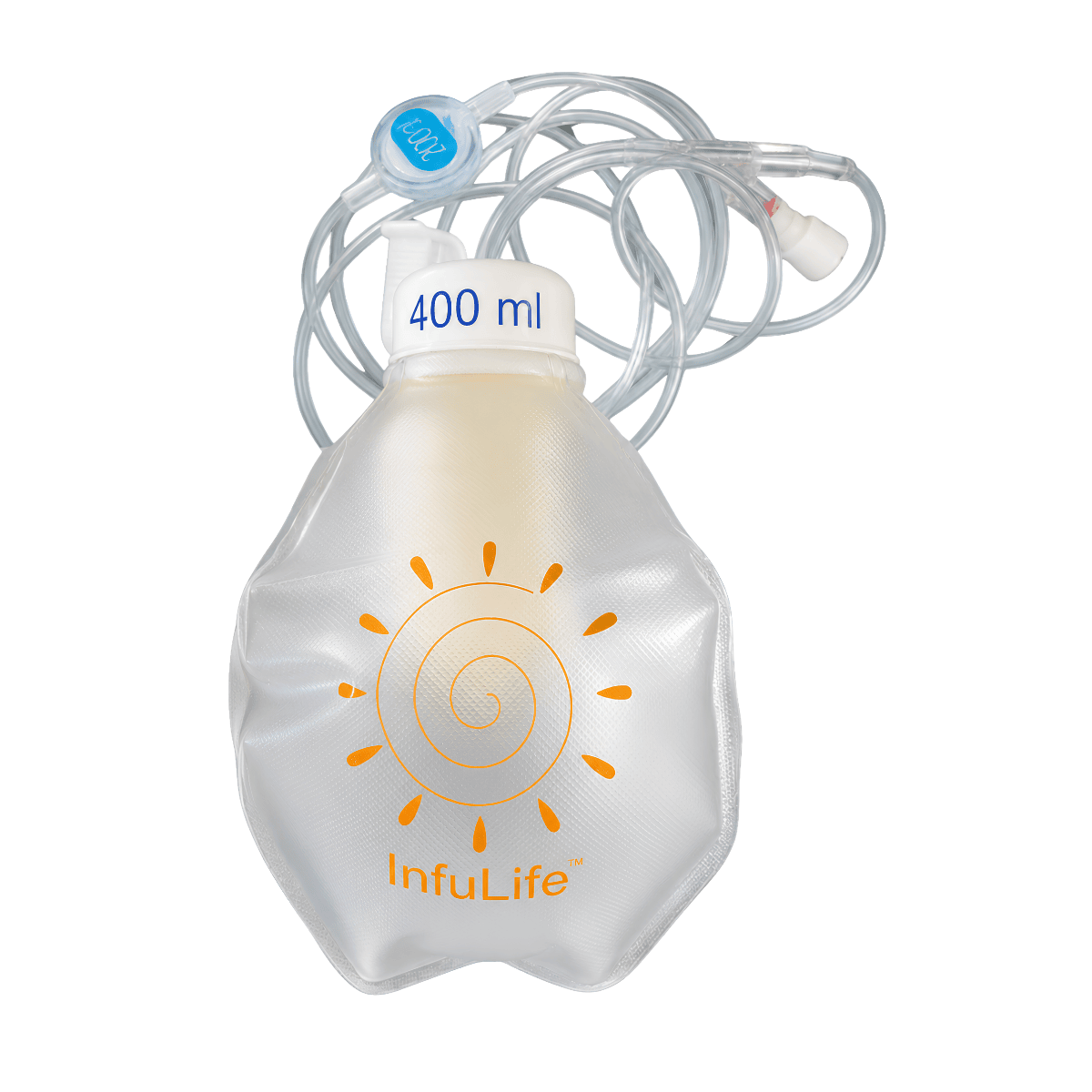
With multiple elastomeric options available in the infusion market, First Medical Source’s InfuLife Elastomeric Pumps are designed to support chemotherapy, pain management, and antibiotic infusion. Available in fill volumes up to 400 mL and flow rates ranging from 0.5 to 200 mL/hr, InfuLife pumps provide a portable solution for continuous infusion therapy.
Designed to address common challenges associated with earlier generations of elastomeric pumps, InfuLife offers:
- 40% greater accuracy
- 50% less filling effort
- 50% lower likelihood of leakage
Elastomeric pumps offer a portable, straightforward approach to continuous, fixed-rate infusions, while electronic pumps provide advanced features such as adjustable flow rates, alarms, and infusion history for therapies requiring greater control. Choosing the appropriate option can help streamline infusion delivery, reduce provider burden and costs, and improve the overall patient experience.
Choosing the Right
Infusion Pump
There is no one-size-fits-all infusion pump. The right choice depends on the medication, prescribed flow rate, treatment duration, care setting, and patient needs. Elastomeric pumps can provide a simple, portable solution for appropriate continuous infusions, while electronic pumps may offer greater programming flexibility and monitoring capabilities.
Understanding the differences between these two options can help healthcare providers select an infusion solution that supports safe, effective therapy while meeting the needs of both patients and care teams.
- Elastomeric Pumps
- Ambulatory Pumps
- Enteral Pumps
- Pole Mounted Pumps
- Syringe Pumps
Explore Infusion Solutions
Looking for the right equipment for your infusion needs? Right Way Medical offers a range of infusion pumps, supplies, and equipment from trusted manufacturers to support diverse therapies and care settings.
Explore our infusion solutions and find the products that fit your needs!